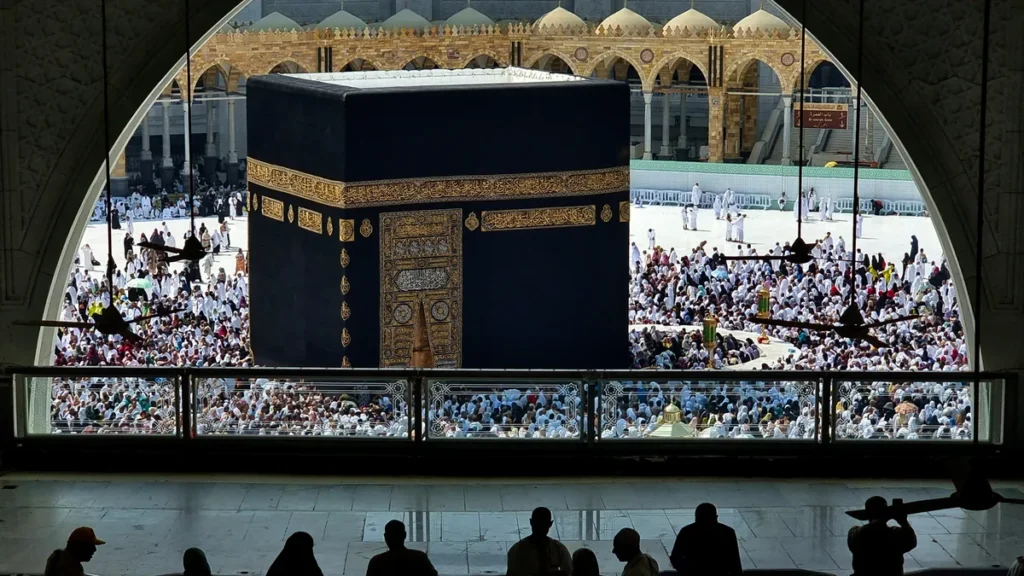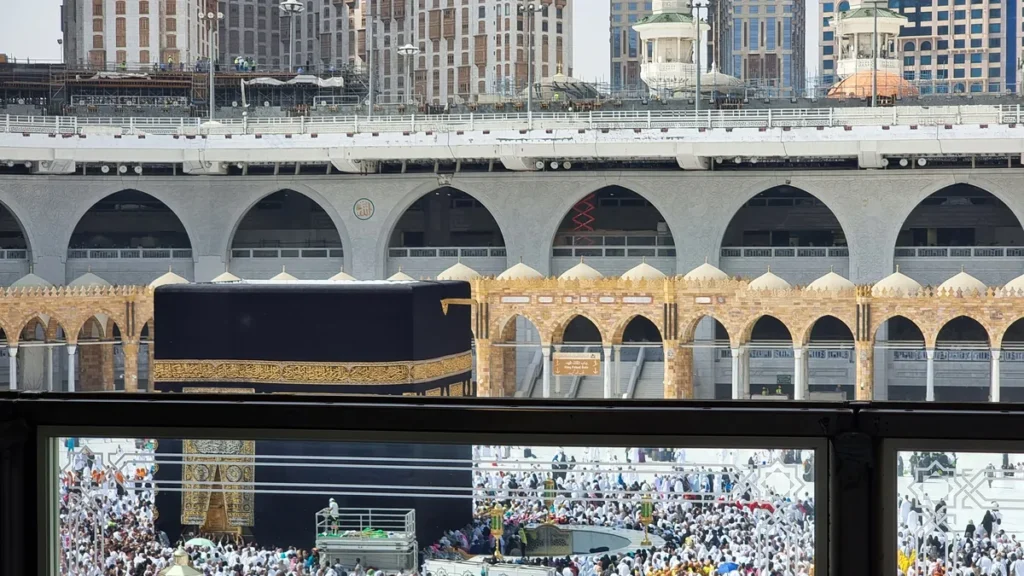
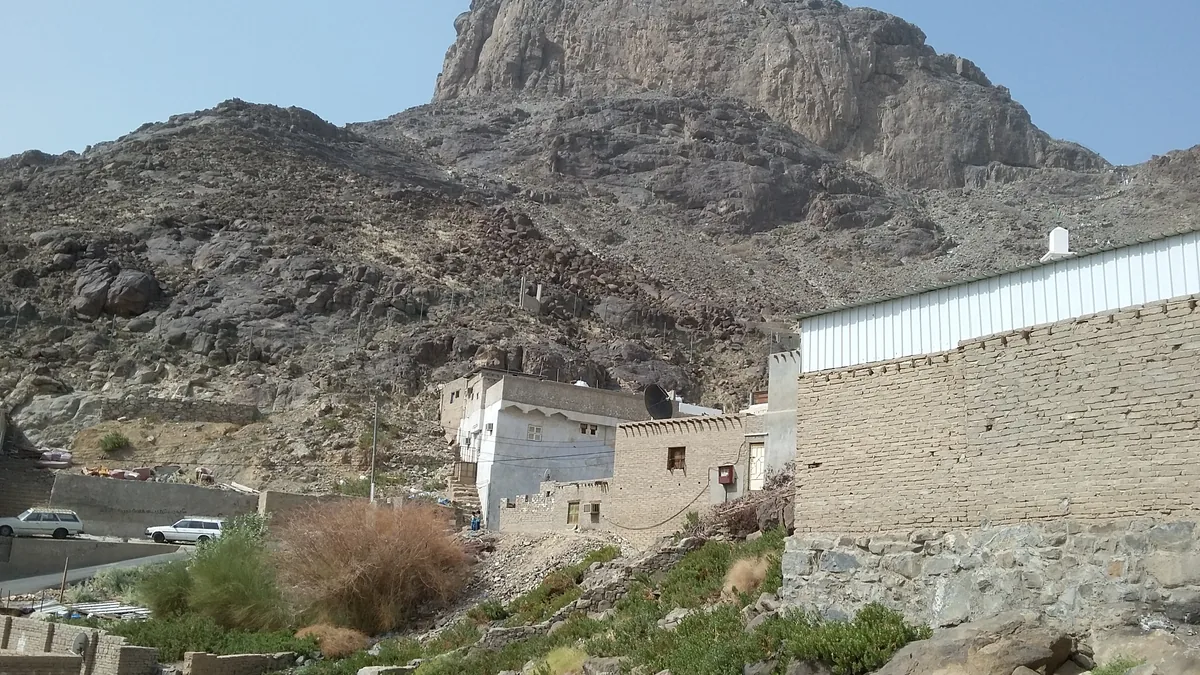
Cave Hira is a small cave near the top of Jabal al-Nour, a mountain on the north-eastern edge of Makkah. It is where the angel Jibril brought the first verses of the Quran to the Prophet Muhammad ﷺ. Many pilgrims climb up to it on a free day, to reflect on where the revelation began.
This guide tells the story of the first revelation from Sahih al-Bukhari and the Quran. It then explains where the mountain is, how hard the climb is, what the Hira Cultural District offers and how to plan a safe, respectful visit.
Quick answer
- The cave is on Jabal al-Nour, about 5 km north-east of the Kaaba in a straight line.
- The first verses of the Quran, from Surah al-Alaq, were revealed there (Sahih al-Bukhari 3).
- The climb takes most fit adults 30 to 60 minutes up, on a paved path and then steep steps.
- Visiting is not a rite of Umrah, and there is no special prayer to perform there.
What is Cave Hira?
It is a small cave on Jabal al-Nour, the “Mountain of Light”, where the Prophet ﷺ used to spend time alone in worship before his prophethood. In Arabic it is called Ghar Hira, and ghar simply means cave. It is where the revelation of the Quran began.
Aisha described how, before the first revelation, the Prophet ﷺ came to love being alone:
“He used to go in seclusion in the cave of Hira where he used to worship (Allah alone) continuously for many days before his desire to see his family.”
Reference: Sahih al-Bukhari 3
He took food with him for these stays, and then returned to his wife Khadijah for more, as the same hadith describes. The cave itself is small, with room for only a few people at a time.
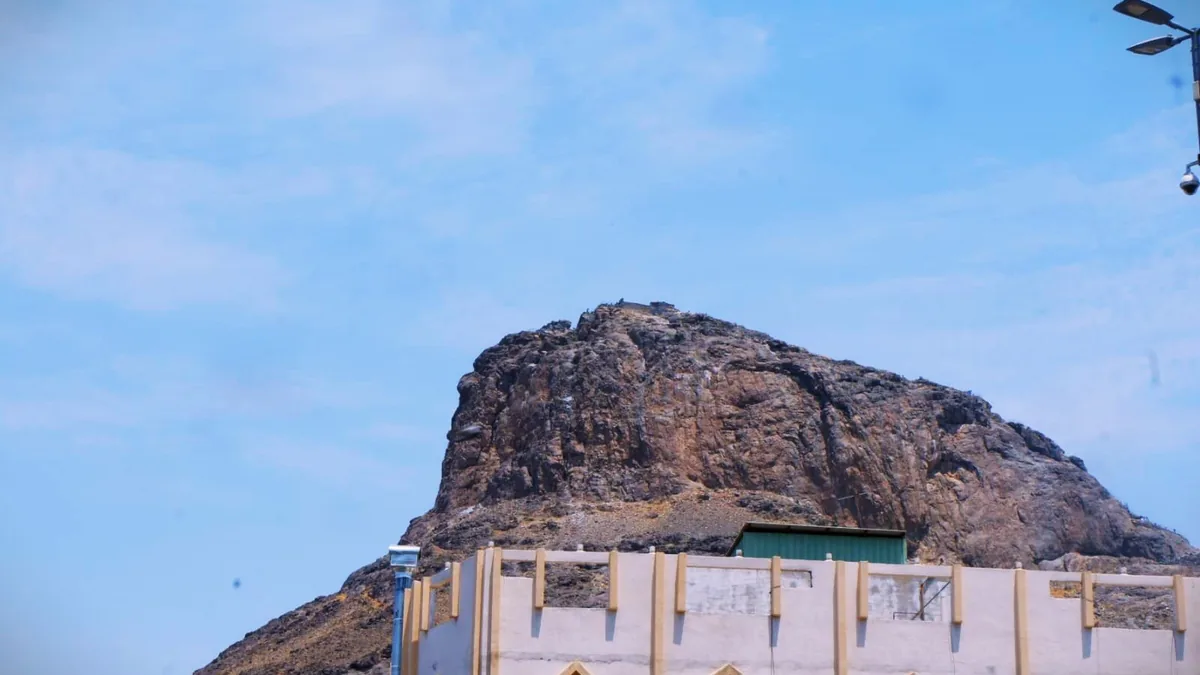
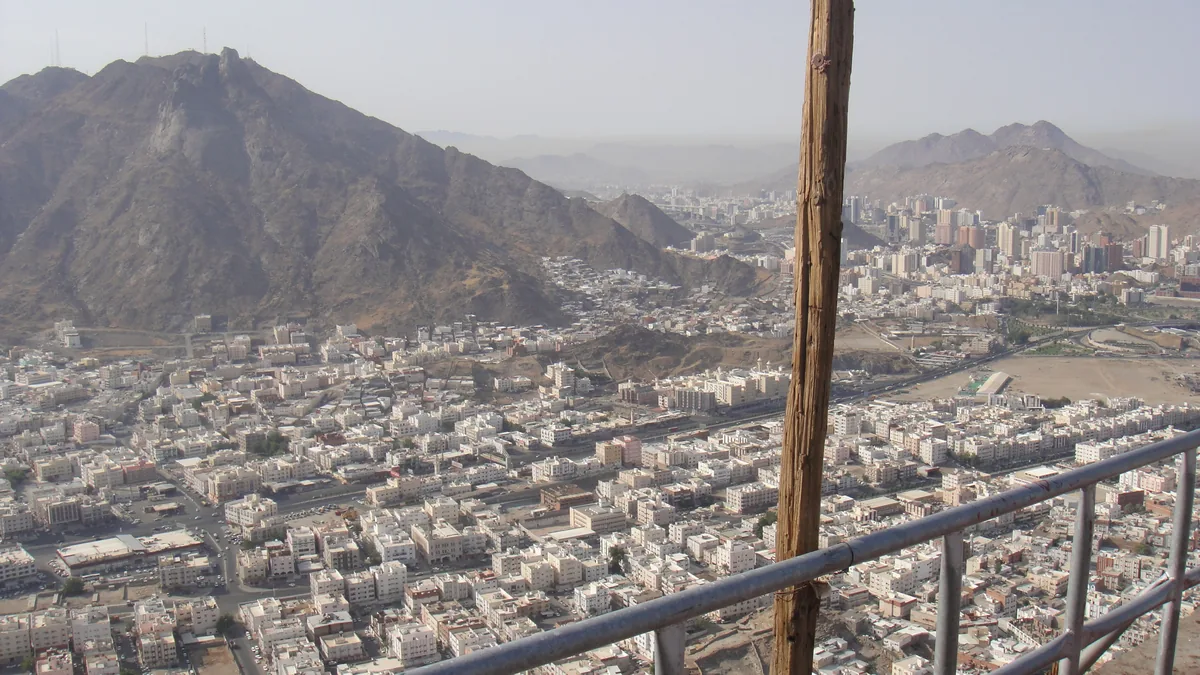
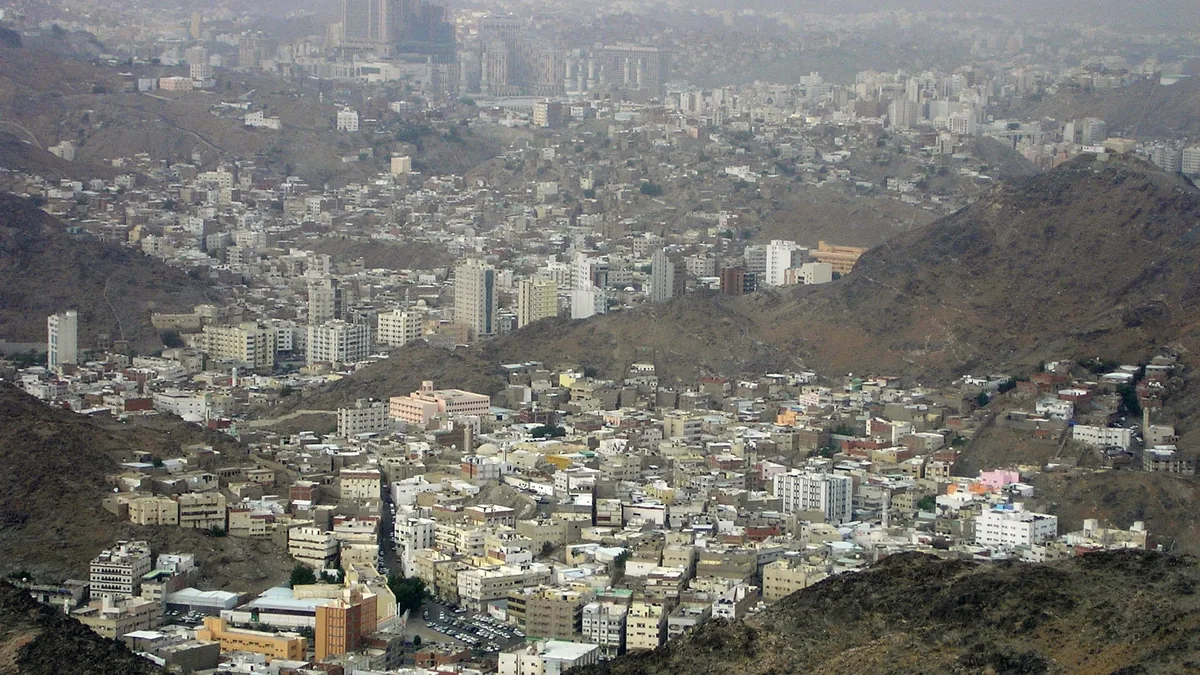
The mountain’s name, Jabal al-Nour, means Mountain of Light. It is a steep, rocky peak that rises above the neighbourhoods on this side of Makkah, and you can see it from many parts of the city.
To learn more about the history of the city’s holiest mosque, read our guide to the history of Masjid al-Haram.
The first revelation in Cave Hira
The angel Jibril came to the Prophet ﷺ in the cave and told him to read. He brought the first words of Surah al-Alaq, the 96th chapter of the Quran. Aisha’s account of that night is recorded as the third hadith of Sahih al-Bukhari.
“The angel came to him and asked him to read. The Prophet (ﷺ) replied, “I do not know how to read.” The Prophet (ﷺ) added, “The angel caught me (forcefully) and pressed me so hard that I could not bear it any more. He then released me and again asked me to read and I replied, ‘I do not know how to read.’ Thereupon he caught me again and pressed me a second time till I could not bear it any more. He then released me and again asked me to read but again I replied, ‘I do not know how to read (or what shall I read)?’ Thereupon he caught me for the third time and pressed me, and then released me and said, ‘Read in the name of your Lord, who has created (all that exists), created man from a clot. Read! And your Lord is the Most Generous.”
Reference: Sahih al-Bukhari 3
These words are the opening of Surah al-Alaq. Here are the first five verses in Arabic, with a transliteration and translation:
ٱقْرَأْ بِٱسْمِ رَبِّكَ ٱلَّذِى خَلَقَ خَلَقَ ٱلْإِنسَـٰنَ مِنْ عَلَقٍ ٱقْرَأْ وَرَبُّكَ ٱلْأَكْرَمُ ٱلَّذِى عَلَّمَ بِٱلْقَلَمِ عَلَّمَ ٱلْإِنسَـٰنَ مَا لَمْ يَعْلَمْ
Iqra’ bismi rabbikal-ladhi khalaq. Khalaqal-insana min ‘alaq. Iqra’ wa rabbukal-akram. Alladhi ‘allama bil-qalam. ‘Allamal-insana ma lam ya’lam.
“(1) Recite in the name of your Lord who created (2) Created man from a clinging substance. (3) Recite, and your Lord is the most Generous – (4) Who taught by the pen (5) Taught man that which he knew not.”
Reference: Quran 96:1-5, Saheeh International translation
The Prophet ﷺ returned home shaking and asked Khadijah to cover him. When he told her what had happened, she comforted him with words that are still remembered today:
“Never! By Allah, Allah will never disgrace you. You keep good relations with your kith and kin, help the poor and the destitute, serve your guests generously and assist the deserving calamity-afflicted ones.”
Reference: Sahih al-Bukhari 3
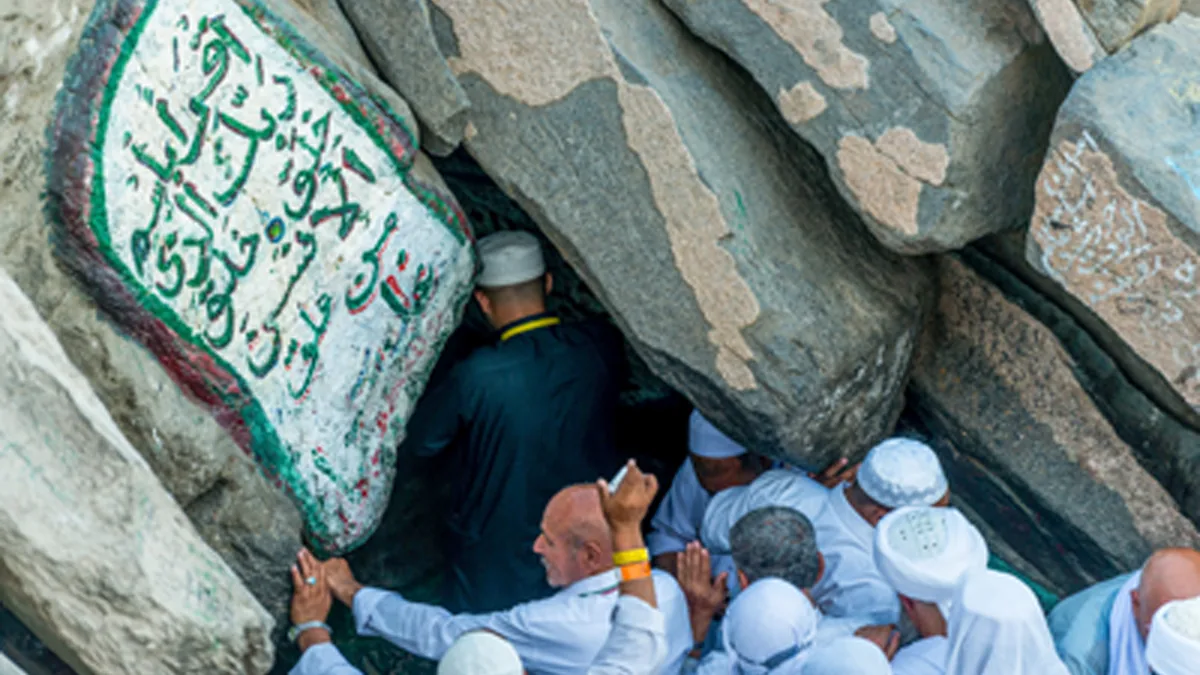
Khadijah then took him to her cousin Waraqa ibn Nawfal, who told him that this was the same angel Allah had sent to Moses. From that night, the revelation of the Quran continued for the rest of the Prophet’s life.
Where is Cave Hira and Jabal al-Nour?
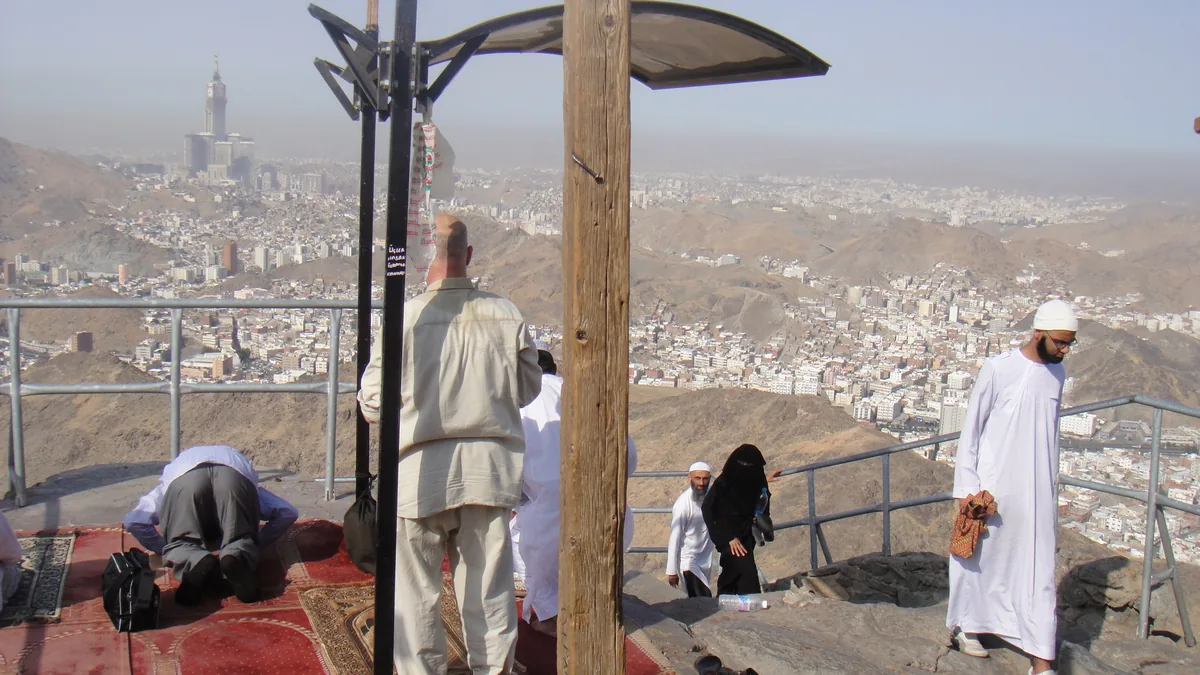
Jabal al-Nour is on the north-eastern side of Makkah. On our measurement of OpenStreetMap data, the cave is about 5.2 km from the Kaaba in a straight line. By road, it is a short drive from Masjid al-Haram, usually 15 to 25 minutes depending on traffic.
So yes, the Hira cave is in Makkah itself, not in the desert far outside it. The mountain stands above the city’s houses and roads, and the Hira Cultural District now sits at its foot.
Taxi drivers know the mountain as Jabal al-Nour or Jabal Hira, and most will also recognise “Hira Cultural District”. Give that name if you want to be dropped at the start of the path.
How high is Cave Hira and how long is the climb?
The cave sits just below the summit of Jabal al-Nour, roughly 550 to 600 metres above sea level. From the foot of the path you climb about 200 metres in height. Most fit adults take 30 to 60 minutes to reach the cave, and a little less to come down.
| At a glance | Detail | Source |
|---|---|---|
| Distance from the Kaaba | About 5.2 km in a straight line | OpenStreetMap |
| Height of the cave | Roughly 550 to 600 m above sea level, near the summit | OpenStreetMap and SRTM elevation data |
| Height you climb | About 200 m from the start of the path | SRTM elevation data |
| The path | About 1 km of paved path, then steep steps to the cave | OpenStreetMap |
| Time to climb | 30 to 60 minutes up, a little less down | Our estimate |
| Opening hours of the path | 24 hours | Hira Cultural District |
Published figures for the mountain’s height vary, which is why we give a range. The important number for your legs is the climb itself: about 200 metres, much of it on steep stone steps. That is similar to climbing a steep hill in the UK, such as the upper part of a popular fell walk, but in much stronger heat.
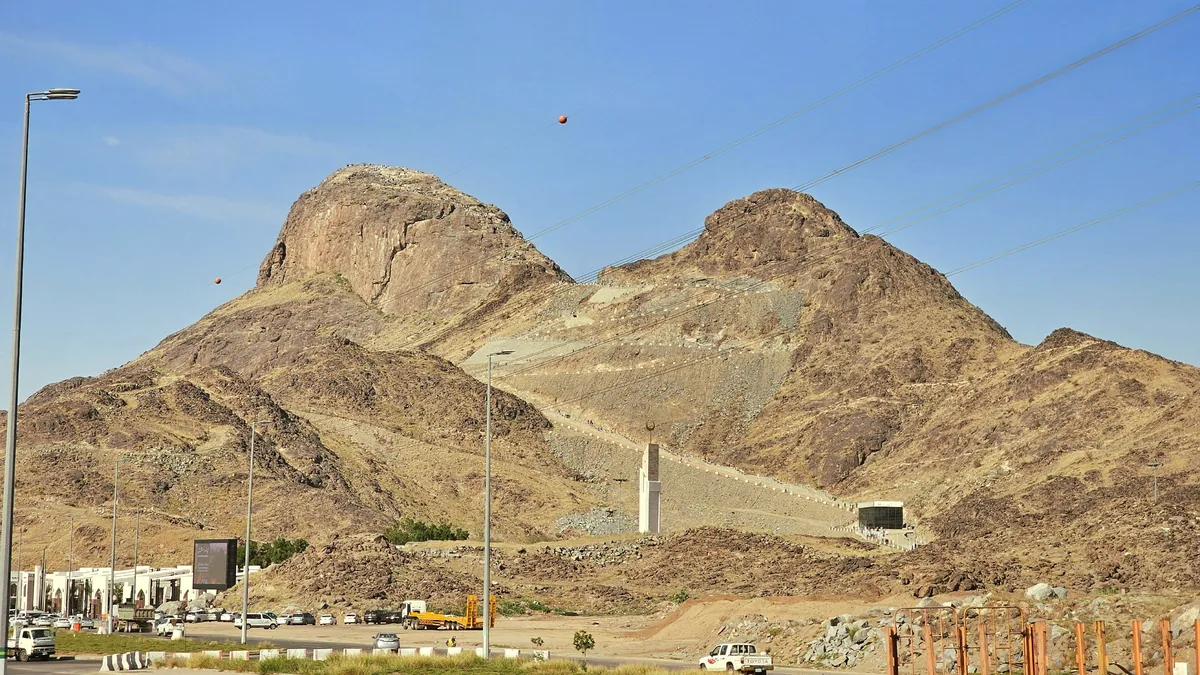
The lower part of the route is a paved path of about a kilometre that starts inside the Hira Cultural District. The official site says there is a visitor centre along the route. The last stretch to the cave is steeper and rockier.
Older visitors and anyone who is not used to hill walking should allow longer and take plenty of rests. There is no shame in turning back if the heat or the steps become too much.
How to get to Jabal al-Nour from your hotel
Most visitors take a taxi or a ride-hailing app, or join a ziyarat tour that includes the mountain. Ask to go to Jabal al-Nour or the Hira Cultural District. From hotels near the Haram, the drive usually takes 15 to 25 minutes, depending on traffic.
- Taxi or app. The simplest option for families. Agree the fare before you set off if the taxi has no meter.
- Ziyarat tour. Many tours visit Jabal al-Nour from the road below, but check whether yours allows time to climb.
- Walking. Walking from the Haram is not recommended: it is a long, hot walk along busy roads before the climb even starts.
For more on getting around, see our guide to transport during Umrah. Our guide to ziyarat places in Makkah and Madinah lists other sites you can combine with this visit.
The Hira Cultural District
At the foot of the mountain, the Hira Cultural District has exhibitions about the revelation, a Qur’an museum, shops and cafés. The path to the cave starts inside the district. As of September 2026, the district and the path are open 24 hours a day.
According to the official Hira Cultural District website, its two main attractions are the Revelation Exhibition and the Qur’an Museum. They use interactive displays, historical artefacts and rare manuscripts to tell the story of the first revelation.
The museums and exhibitions keep their own hours, as listed on the official site in September 2026:
- Saturday to Wednesday: 7:30 to 23:30
- Thursday: 7:30 to 01:00
- Friday: 15:30 to 01:00
Tickets for the museums are sold online through the district’s website, and prices can change, so check there before you go. The district also has a special exhibitions hall, and a park and a library are listed as coming soon.
A visit to the exhibitions before the climb helps children, especially, understand why this mountain matters. You can also sit in a café afterwards to rest before heading back.
Best time to climb
Go straight after Fajr or in the cooler months, and avoid the middle of the day. The rocks hold the heat, there is little shade on the path, and Makkah is hot for most of the year. An early start also means fewer people at the cave.
| Time | Why | Watch out for |
|---|---|---|
| Straight after Fajr | The coolest part of the day, with soft light | Getting back in time for your plans at the Haram |
| Late afternoon | Cooler than midday, with sunset views | Coming down in the dark; bring a torch |
| Midday | Not recommended | Strong sun and heat on bare rock |
| November to February | The mildest weather of the year | It can still be hot in the sun by late morning |
| June to September | Only very early in the morning | Extreme heat; avoid if you are older or unwell |
| Friday | The path is open as usual | The museums open only from 15:30 |
If your trip falls in summer, plan the climb for the first morning you feel rested. Do not try it on the day you perform Umrah.
What to wear and bring
Wear good shoes with grip and loose, modest clothes, and carry water and a small torch. Pack light, because you will want your hands free on the steep steps. A small backpack works better than a shoulder bag.
- Shoes. Trainers or walking shoes with good grip, not sandals or slippers.
- Water. At least one bottle each, more in the warmer months.
- Sun protection. A hat, sun cream and sunglasses, unless you are in ihram.
- A torch. Useful if you start before dawn or come down after sunset.
- A small snack. Dates or a cereal bar help if you feel tired.
- Your phone and hotel card. So you can call a taxi and find your way back.
Leave valuables at the hotel. If you are travelling with young children, a baby carrier is safer than a pushchair, which cannot go up the steps.
Is visiting Cave Hira part of Umrah?
No. Visiting the cave is a historical visit, not a rite of Umrah or Hajj, and there is no special prayer or dua to perform there. Your Umrah is ihram, Tawaf, Sa’i and cutting your hair.
Visit the mountain, if you wish, simply to reflect on history.
A Hanafi answer from Mufti Online states that visiting the caves of Hira and Thawr is “not from among the Sunnat or Mustahab acts of Hajj or Umrah”. In other words, it is neither a Sunnah nor a recommended act of the pilgrimage.
IslamQA (answer 100274) explains that climbing up to the cave as an act of worship has no basis in the Sunnah. If you climb only to look and learn, it sees no reason to object. It quotes Ibn Taymiyyah, who noted that the Prophet ﷺ and his Companions did not visit the cave during his Farewell Pilgrimage.
So come with the right intention: to learn and reflect, not to earn a special reward. Keep your worship for the Haram, and if you are unsure about any practice, ask a qualified scholar. For the rites themselves, see our guide to how to perform Tawaf.
Etiquette and safety on the mountain
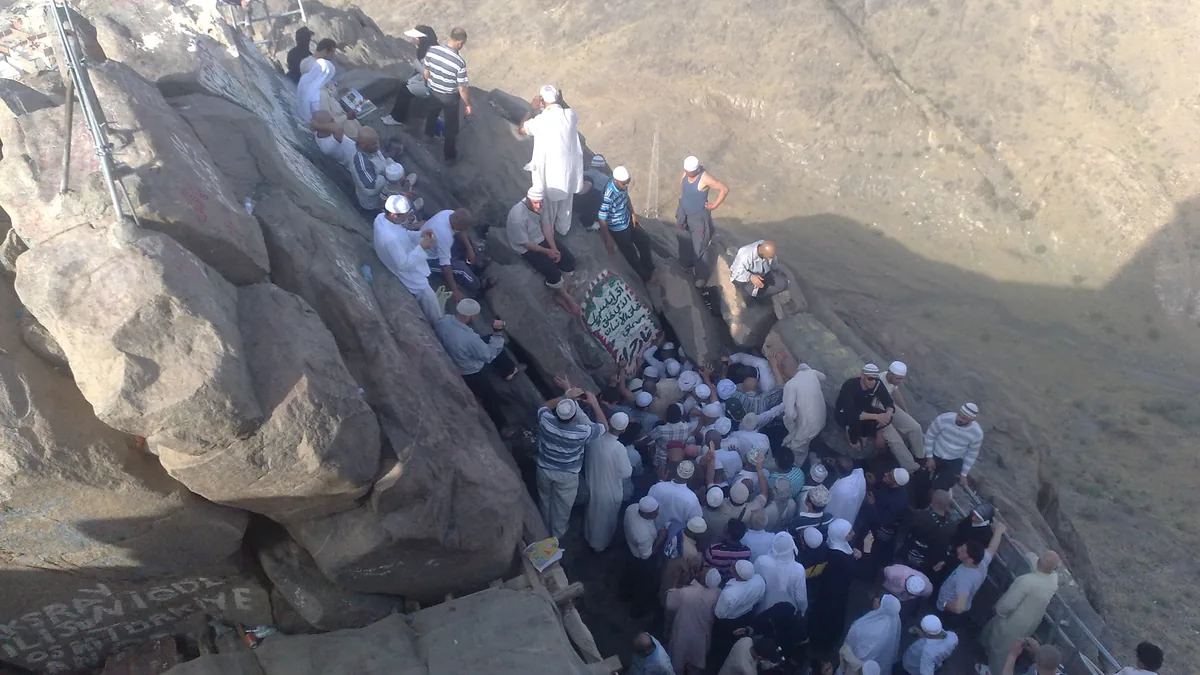
Keep to the path, do not push at the cave entrance and respect other visitors. The space at the top is narrow, and many people want a moment there. Take your litter home, and keep children close on the steep sections.
- Be patient at the cave. Wait your turn calmly and do not squeeze past people on the rocks.
- Do not write or carve. Leave the rocks and the cave exactly as you found them.
- Take your rubbish with you. Bottles and wrappers spoil the mountain for everyone.
- Keep children close. Some edges are steep, and a fall on rock can be serious.
- Know your limits. If you have a heart or lung condition, or trouble with your knees, speak to your doctor before planning a steep climb.
- Do not climb alone at night. Go with others, and tell someone at your hotel where you are going.
If you would like a ziyarat of Makkah arranged for your group, mention it when you ask Travel to Umrah for a quote. We can suggest a plan that fits your days in the city.
Cave Hira and Cave Thawr: what is the difference?
The cave on Jabal al-Nour is where the revelation of the Quran began. Cave Thawr, on a mountain south of Makkah, is where the Prophet ﷺ and Abu Bakr hid for three nights during the Hijrah, the migration to Madinah. They are two different caves, on two different mountains.
Aisha reported that the Prophet ﷺ and Abu Bakr “reached a cave on the mountain of Thaur and stayed there for three nights” (Sahih al-Bukhari 3905). The Quran also refers to that moment, when the Prophet ﷺ told his companion not to grieve, because Allah was with them (Quran 9:40).
The same guidance applies to both caves: they are places of history, not rites of Umrah. For more hidden corners of the two holy cities, read our guide to the hidden beauty of Makkah and Madinah.
Frequently asked questions about Cave Hira
How high is the Cave of Hira?
The cave sits near the summit of Jabal al-Nour, roughly 550 to 600 metres above sea level. Published figures vary, so we give a range.
From the start of the path, you climb about 200 metres in height, on our measurements from OpenStreetMap and SRTM elevation data.
How long does it take to climb Jabal al-Nour?
Most fit adults take 30 to 60 minutes to reach the cave, and a little less to come down.
Allow two to three hours for the whole visit, including the drive, rests and time at the Hira Cultural District. Older visitors and families with children should allow longer.
Is the Hira cave in Makkah?
Yes. It is on Jabal al-Nour, on the north-eastern side of Makkah, about 5.2 km from the Kaaba in a straight line.
By road, it is usually a 15 to 25 minute drive from Masjid al-Haram, depending on traffic. Ask for Jabal al-Nour or the Hira Cultural District.
Can women and children climb Mount Hira?
Yes, many women and children make the climb. It is steep, so wear good shoes, carry water and go early in the day.
Keep young children close on the steep sections, and use a baby carrier rather than a pushchair, which cannot go up the steps.
Is there an entry fee?
The path to the cave is open 24 hours a day, according to the Hira Cultural District.
The museums and exhibitions at the foot of the mountain are ticketed, and tickets are sold online through the district’s website. Prices can change, so check the official site before you go.
Is it safe for older pilgrims?
It can be, if they are fit and go early, but the climb is steep and hot. Anyone with a heart or lung condition, or knee problems, should speak to their doctor first.
Many older pilgrims enjoy the Hira Cultural District and view the mountain from below instead.
Should I pray inside the cave?
There is no special prayer or dua for the cave, and scholars say it should not be treated as a place of worship. The Prophet ﷺ did not visit it during his Farewell Pilgrimage.
Visit to reflect on history, and keep your prayers for the Haram. Ask a qualified scholar if you are unsure.
Final thoughts: visiting Cave Hira with the right intention
Cave Hira is where the Quran’s first words were revealed, and standing near it is a powerful reminder of how Islam began. Go early, wear good shoes and carry water. Come to reflect on history, and keep your worship for the Haram.
When you are ready to plan your trip, compare our affordable Umrah packages, which start from £555 per person as of September 2026, with the visa included. We arrange flights from London, Manchester, Birmingham and other UK airports. Use the free quote form below, message us on WhatsApp or call +44 20 3287 2118, and the Travel to Umrah team will help you plan your days in Makkah.
Sources
We checked these sources in September 2026.
- Sahih al-Bukhari 3: the beginning of the revelation, Sunnah.com
- Quran 96:1-5 and Quran 9:40, Saheeh International translation, Quran.com
- Sahih al-Bukhari 3905: the cave on the mountain of Thawr during the Hijrah, Sunnah.com
- Hira Cultural District: official site, opening hours and exhibitions
- IslamQA answer 100274, quoting Ibn Taymiyyah (Majmu’ al-Fatawa 26/144), and Mufti Online (Mufti Zakaria Makada) on visiting the caves of Hira and Thawr
- OpenStreetMap: Cave of Hira and the path to the cave, map data © OpenStreetMap contributors; elevations from SRTM data via OpenTopoData